Tech Neck Syndrome

TECH NECK

If you need to sit and stand for a long time, or need to carry heavy loads, climb up and down the stairs, please be aware! Poor long-term posture combined with muscle strain can easily lead to spinal problems, such as lumbar or Cervical Disc Herniation. Treatment of Disc Herniation can be  described as endless troubles, and must not be underestimated .   

Complex spinal nerve distribution:

The human spine is mainly composed of the cervical vertebrae, the thoracic vertebrae, the lumbar vertebrae, the sacral bone and the tailbone. There are a total of thirty-three vertebrae, except the first and second of cervical vertebrae, there is a piece of cartilage between each vertebra, called the intervertebral disc. The outer layer of the intervertebral disc is annulus fibrosis, and the inner layer is soft bone is nucleus pulposus. It has a function of relieving shock, absorbing the pressure of the spine and maintaining the body movement. With the increase of age, the nucleus pulposus in the intervertebral disc begins to dehydrate and deteriorate. The annulus fibrosis also degenerates, which greatly reduces the pressure and shock absorption ability of the intervertebral disc. If we still have bad posture at this time, the sustained strain of the spine and inevitably cause disc herniation . Depending on the level of the protrude intervertebral disc pressing the nerve, the patient may have symptoms of muscle pain, numbness. Especially L5/S1disc and C5,6 is most common protrusion taken place, it can cause foot pain; cervical disc protrusion affects the shoulder, back and hand of the patient.

Complex spinal nerve distribution:

There are many non-surgical conservative methods for the treatment of intervertebral disc herniation . To test the effectiveness and progress of the treatment, magnetic resonance imaging (MRI) can be used to compare before and after treatments, so that you can know whether it is helpful or effective for its treatment.
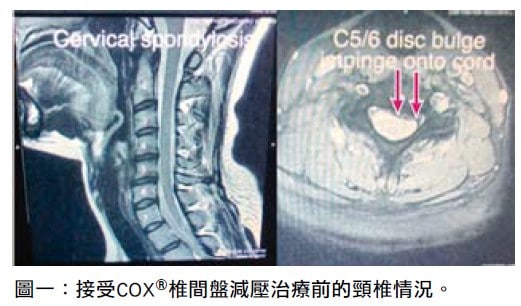
Pic 1 – Cervical disc protrusion before Cox® decompression treatment
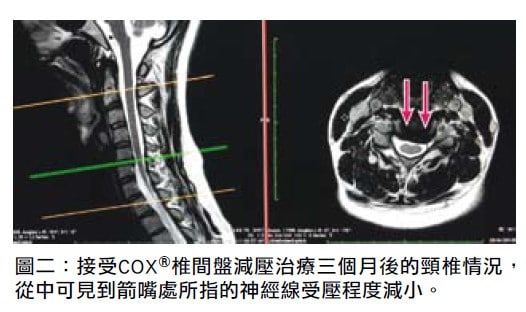
Pic 2 – After three months of Cox® decompression treatment, the cervical protruded disc is reabsorbed
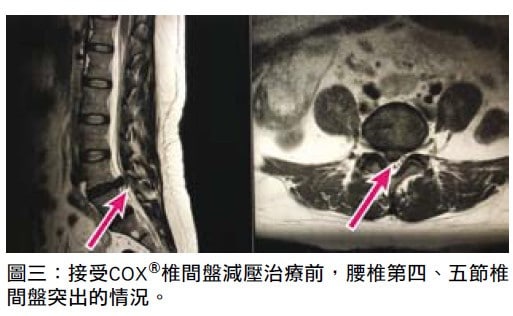
Pic 3 – Lumbar disc protrusion before Cox® decompression Treatment
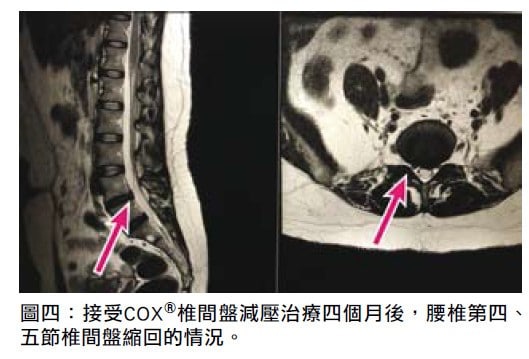
Pic 4 – After four month Cox®decompression treatment, L4,5 protruded disc reabsorbed.

Cox® Technic – decompression manipulation
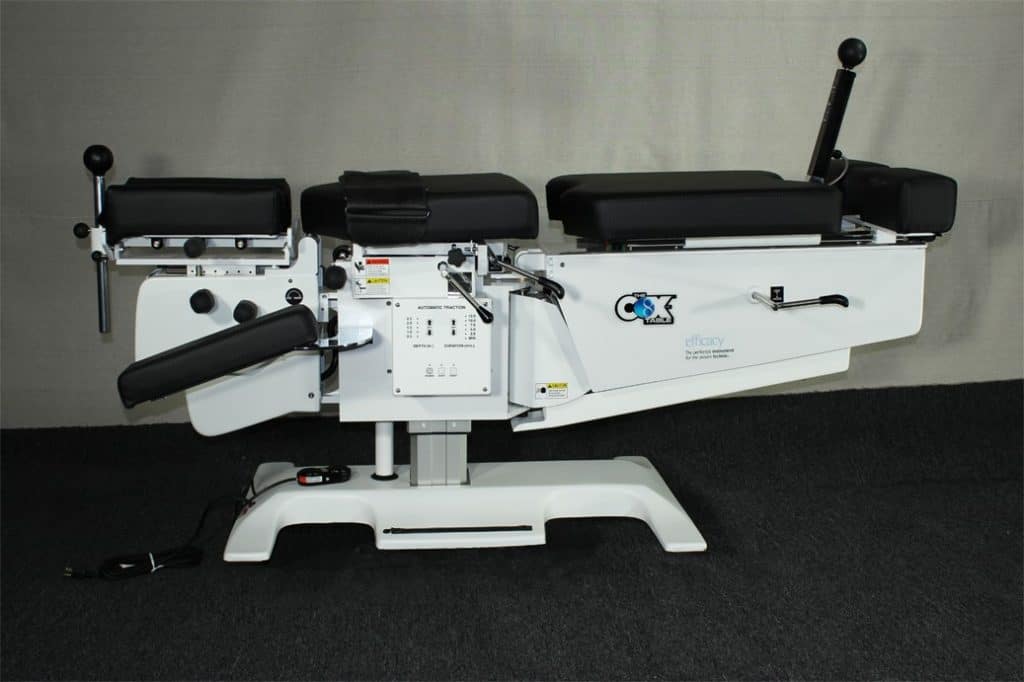
Disc herniation does not come overnight. It takes a long time for the protruded disc to be recovered, the treatment time is about three to six months, and the patient should have patience and reasonable expectations. However, before COX® decompression therapy, short-term and long-term goals will be set for patients. The short-term goal is target about nine to fifteen treatments in three to four weeks, and expected to achieve 30-50% improvement progress, including reducing pain and increased spine mobility. As for the long-term goal, after three to four months of treatment, magnetic resonance will be repeated to check the progress of the disc herniation .

Cox® 8 table

error: Content is protected !!