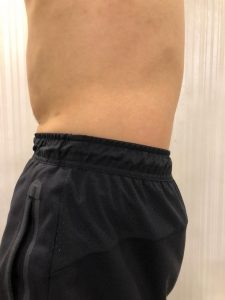
Our low back relies on two sets of muscles for balance, but if we often use a certain set of muscles to support our spine, this set of muscles will be too tight, and a tight set will increase muscle tension. The stress causes problems in joints, ligaments and tendons, which in turn causes excessive compression of the spinal nerves and trigger low back pain.
4 factors causing low back muscle imbalance
There are many causes for muscle imbalance, mainly divided into the following 4 items.
- Accidental Injury
Some sudden pulling forces cause muscle injuries, such as: falls, sports injuries, muscle or ligament tears caused by weight lifting, etc.
- Insufficient activity
In general, we have about 14 to 17 hours a day, with little or no participation in activities. Sitting or standing for a long time will only make the low back muscles tense, and then the muscles will become stiff and weak. This affects blood circulation, prevents the injured muscles from healing quickly, and makes the body often tired.
3.Incorrect Posture
If the muscle is injured with incorrect posture, it will increase the low back pain and increase the muscle imbalance.
- Excessive exercise
When people encounter low back pain, they will do stretching exercises immediately, hoping to improve the situation of low back pain. But it turns out that this kind of method has the opportunity to do wrong exercises and make the low back pain worse. Because many people, without knowing the cause of their low back pain, tend to over-exercise the over-tightened muscles, to make the tight muscles get tighter. Relatively, the weaker muscles on the other side will become weaker. Therefore, not only did the low back pain not improve, it will accelerate the deterioration of the low back pain.
How to self access
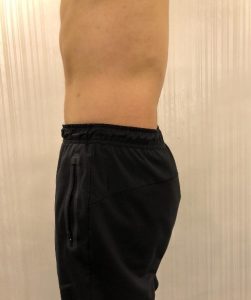
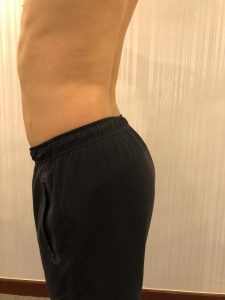
Knowing the cause of low back pain, The following 3 items, respectively, are the assessment of the pre-tilt condition, the post-tilt condition and the height of the pelvis, which are effective methods for self-evaluation of low back pain.
1. Assess the condition
Look in the mirror and see if you have the following conditions:
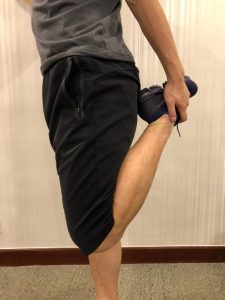
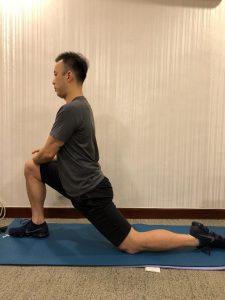
Then test the tension of the following two sets of muscles, both of which should be tested:
If the above situation occurs, you should do more stretching exercises (Figure 3) and (Figure 4).
Assess the condition of the pelvis
Look in the mirror and see if your pelvis is leaning back:
The following tests the tension of the two groups of muscles, both sides should be tested.
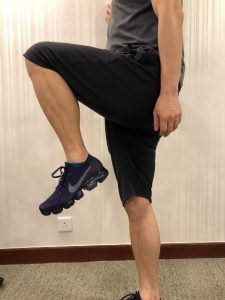
(Figure 6) Bend the knee up with one foot and test whether it can be raised above the hip bone.
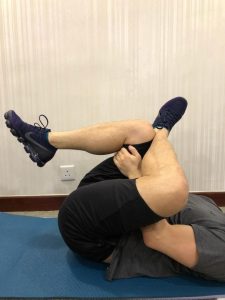
- Evaluation of pelvis height
Look in the mirror and see if your pelvis is high on one side and low on the other:
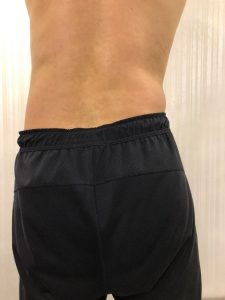
(Picture 8) The right pelvis is higher than the left
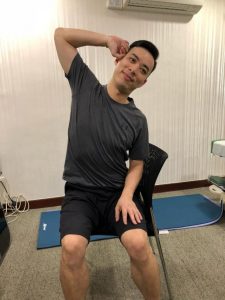
The following tests the tension of the two groups of muscles, both sides should be tested.
If feeling the tight muscle on right side, you should do more stretching exercises on that side (Figure 9).
