Foot pain! Beware of spinal meningiomas
31-year-old Miss Ngai is engaged in medical work. One day in October 2015, after running, she found that her legs were painful and tight, but the pain eased after a few days, so she ignored it. Until March 2016, after doing yoga and stretching, she found that the previous leg pain reappeared, but this time the pain was worse than the previous one.
Case Sharing
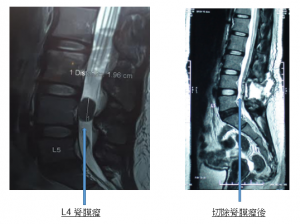
Ms. Ngai was referred to physical therapy for traction and low back stretching, but the pain in her feet increased immediately after the traction, and the pain also extended to the callosum, coccyx and the top of her foot. The foot was weak and it was very difficult to walk, the patient went to a private hospital to receive MRI imaging that night. The results of the scan showed that a large meningioma (Meningioma) had grown in the fourth segment of the lumbar spine and the cauda equina was compressed, which caused defects in the patient’s sensory and muscle nerves. In addition to meningioma, the patient also had signs of a herniated disc in the fifth lumbar spine.
Neurosurgeon performed the tumor removal surgery. The patient’s tumor compressed the cauda equina and caused nerve defects. Although the patient’s foot pain improved immediately after the operation, she still felt that the right foot was slightly weak and the right toe was also affected and numbness. After being referred by a neurosurgeon to the author for postoperative Cox® Decompression Treatment. After three weeks of treatment, the patient’s postoperative foot weakness and toe numbness were greatly improved. Since the patient also has the problem of herniated disc in the fifth lumbar spine, Cox® decompression manipulation can also be used to treat the herniated cartilage in the fifth segment.
Meningiomas are often misdiagnosed as other conditions
Meningiomas, derived from arachnoid endothelial cells or fibrocytes of the dura mater, are benign spinal cord tumors. Statistical analysis shows that the majority of the affected patients are female. The pathology of meningioma is not clear, and may be related to genetic, hormonal, physical and chemical factors, but the cause is still uncertain.
Meningiomas grow slowly, once the spinal cord is compressed by the tumor, it can cause sensory nerve, motor nerve, reflex and muscle dysfunction and deterioration. These condition are often misdiagnosed as sciatica, muscle strain, bone spurs or nerve root inflammation. Inappropriate treatment after detailed questioning and examination will definitely delay the patient’s situation. In terms of surgery, neurosurgeons remove meningiomas, with good postoperative response and low recurrence rate.
Postoperative management after tumor removal
Generally, patients can be treated with Cox® decompression manipulation three to four weeks after surgery, but the actual progress is determined by the patient’s recovery condition. Many patients may experience weakness and numbness of the feet after surgery, which is related to the nerve defect compressed by the tumor before surgery.
In this case, Ms. Ngai still has the problem of a herniated disc in the fifth lumbar spine to follow up, so she can’t do traction and pull back or spinal manipulation methods. The Cox® decompression manipulation is very safe and controlled by chiropractor. Unlike other traction treatment beds, which are controlled mechanically, there is no involvement of the therapist’s clinical judgment. In Ms. Ngai’s situation, Cox® decompression manipulation is the appropriate treatment.